|
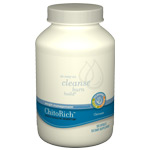
ChitoRich®
when combined with a healthy diet and
exercise program, allows you to live your
life sensibly.
• Reduces Excess Fat Absorption*
• Supports Healthy Digestion*
• Twice As Effective As The Original
ChitoRich Formula*
Be honest. Sometimes
your greatest dietary temptation is freshly
baked cookies or desserts. Unicity has good
news. Say goodbye to your strict no-fat,
no-fun diet. Our innovative, new and
improved ChitoRich reduces your body's
excess fat absorption while supporting
healthy digestion. ChitoRich is created from
the most potent fat reducing ingredients
extracted from nature's richest resources,
including desert cactus, ocean crustaceans,
aloe vera, and broccoli. Make ChitoRich part
of your balanced nutrition routine, and help
yourself to an occasional dessert.
Research Brief
Many dieticians and
clinicians claim that the optimal
dietary-fat intake is approximately 30
percent of total caloric intake. However,
due to fast food and other modern food
preferences, intake of dietary fat has
skyrocketed.
There are different types of fats, or
lipids, within the body. Most are important
as a source of high-energy compounds as well
as components of many structural elements in
the body. Fats are composed of long chains
of carbon atoms with various amounts of
hydrogen atoms attached. These carbon chains
can vary in length from short to medium to
long. Depending upon the way in which the
hydrogen atoms are attached, a fat can be
either saturated or unsaturated.
Though cholesterol can be considered a fat,
it is also classified as a sterol and forms
the basis for the production of compounds
that regulate metabolic functions. It is not
only consumed in the diet but also produced
in the liver. High cholesterol is dangerous
to health, and diets high in saturated fats
tend to increase blood levels of harmful
fats that can affect cardiovascular health.
Diets high in fiber tend to reduce the
absorption of various fats.
Fats and cholesterol are transported in the
blood by lipoproteins. There are two types
of lipoproteins: HDL (high-density
lipoprotein) and LDL (low-density
lipoprotein). LDL transports cholesterol in
the blood and deposits it along the walls of
the arteries for storage. Accumulation of
this LDL can potentially damage the arterial
wall. HDL blocks the entrance of LDL into
the arterial wall and carries away excess
cholesterol.
FAQs
Q:
Why is the new
ChitoRich formulation better?
A:
The new, improved
ChitoRich contains not only chitosan, a
fat-binding fiber derived from shellfish,
but also NeOpuntia, an extract from the
cactus Opuntia ficus-indica that also binds
to fat. With the combination of chitosan and
NeOpuntia, ChitoRich can now bind twice as
much fat as the old formula.*
Q:
Is there anyone who
should not consume the new ChitoRich?
A:
ChitoRich is not
recommended for people who have shellfish
allergies or for pregnant or lactating
women.
Q:
Can I take ChitoRich
with other supplements?
A:
Because ChitoRich helps
the body eliminate fat without fully
digesting it, it is recommended that you
take ChitoRich two hours before or after
taking any fat-soluble supplements.
Q:
When should ChitoRich
be consumed?
A:
ChitoRich should be
taken with meals that contain fat.
Q:
If I consume a meal
that contains more fat, can I take more
ChitoRich?
A:
Yes. If you are
consuming a meal high in fat, you can take
an extra capsule or two.
References
Fernandez M L, et
al. Prickly pear (Opuntia sp.) pectin alters
hepatic cholesterol metabolism without
affecting cholesterol absorption in guinea
pigs fed by hypercholestrolemic diet. J
Nutr 1994; 124:817-24.
Fernandez M L, et al. Prickly pear (Opuntia
sp.) pectin reverses low-density lipoprotein
receptor suppression induced by a
hypercholesterolemic diet in guinea pigs.
J Nutr 1992: 122:2330-40.
Hedgewood A D. Human health discoveries with
Opuntia sp. Cactaceae. Hort Science
1990; 25:1515-16.
Jaramillo-Flores M E, et al. Effect of
different heat treatments on the retention
of carotenoids in nopal (Opuntia ficus
indica). Poster, Institute of Food
Technologists Annual Meeting. June 23-27,
2001; New Orleans, Louisiana.
Kanauchi O, Deuchi K, et al. Increasing
effect of a chitosan and ascorbic acid
mixture on fecal dietary fat excretion.
Biosci Biotech Biochem 1994; 58:1617-20.
Terada A, Hara H, et al. Effect of dietary
chitosan on faecal microbiota and faecal
metabolites of humans. Microb Ecol Health
Dis. 1995; 8:15-21.
Trautwein F A, Jargensen U, Erbersdobler HF.
Cholesterol-lowering and
gallstone-preventing action of chitosans
with different degrees of deacetylation in
hamsters fed cholesterol-rich diets. Nutr
Res 1997; 17:1053-65.
|